Supreme Court Rejects Automatic Gun Ban for Regular Cannabis Users in United States v. Hemani
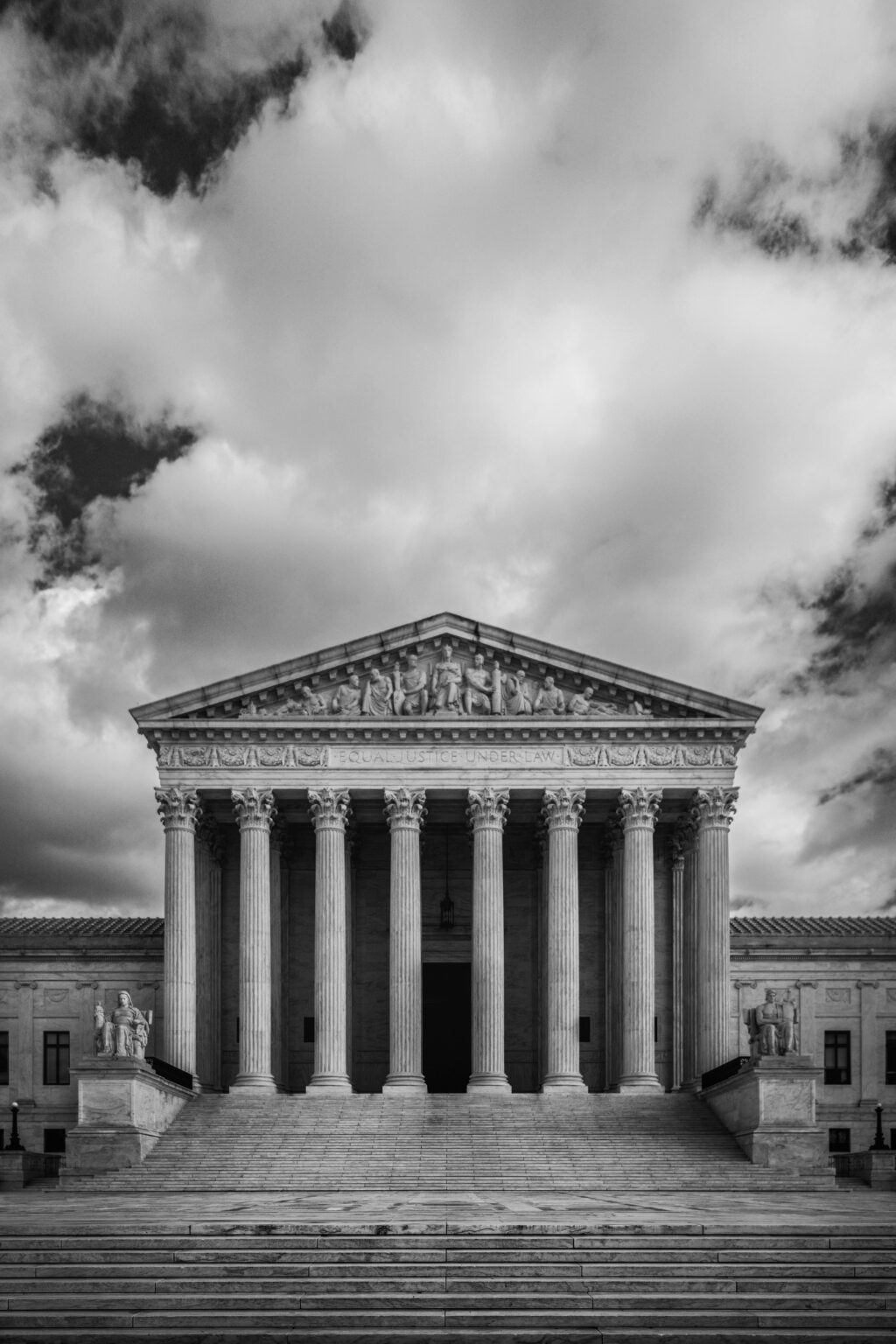
The United States Supreme Court has ruled that the federal government could not automatically prosecute a Texas man for possessing a firearm solely because he regularly used marijuana.
In United States v. Hemani, the Court held that applying the federal “unlawful user” firearm prohibition to Ali Hemani under the facts of his case violated the Second Amendment.
Basically…
The federal government argued that admitting to regular marijuana use was enough to automatically remove Hemani’s right to possess a firearm—even without evidence that he was violent, intoxicated while handling it or dangerous to anyone.
The Supreme Court said the government needed a stronger constitutional justification than that.
How the Case Started
Federal agents searched Hemani’s family home in 2022 while investigating suspected terrorism-related activity involving members of his family.
According to the Court’s opinion, Hemani cooperated with the search. He surrendered a firearm kept inside the home, directed agents to marijuana on the property and later told investigators that he used marijuana approximately every other day.
More than six months after the search, prosecutors charged him under 18 U.S.C. § 922(g)(3).
That federal law prohibits anyone considered an “unlawful user” of—or someone addicted to—a controlled substance from possessing a firearm.
The charge was not based on terrorism, trafficking or an allegation that Hemani used the gun to threaten anyone. The government relied solely on his admitted marijuana use while possessing a firearm in his home. A conviction could have exposed him to as much as 15 years in federal prison.
What the Federal Government Argued
Under the government’s interpretation, a person becomes automatically prohibited from possessing a firearm once they qualify as an unlawful user of any federally controlled substance.
That restriction can apply regardless of:
- The particular substance involved
- The amount being used
- Whether the person has ever acted violently
- Whether the substance has made them unable to manage their life
- Why they possess the firearm
- Whether they have handled it safely
Because marijuana remains controlled under federal law, regular cannabis consumers can fall within that prohibition even when their state allows medical or adult-use cannabis.
The federal government compared the restriction to historical laws that limited the freedom of people described at the time as “habitual drunkards.”
The Court was not convinced.
Why the Supreme Court Rejected That Comparison
The Supreme Court explained that the historical laws cited by the government did not usually target people merely because they regularly consumed alcohol.
Instead, those laws generally applied to individuals whose drinking had left them incapacitated, unable to manage their affairs or unable to control their behavior.
That is a major difference.
The federal firearm law, as the government attempted to apply it to Hemani, did not require proof that marijuana had incapacitated him or made him dangerous. It treated regular unlawful use alone as enough to trigger the ban.
The Court also noted that many of the historical restrictions involved some type of legal process before a person lost their freedom. By comparison, the government’s interpretation of Section 922(g)(3) automatically removed firearm rights without first requiring an individualized judicial finding of danger or incapacity.
What the Supreme Court Actually Ruled
The Court held that the federal government’s prosecution of Hemani under the “unlawful user” portion of Section 922(g)(3) was inconsistent with the Second Amendment.
Importantly, this was an as-applied ruling.
That means the Court evaluated how the law was used against Hemani based on the particular facts presented. The decision did not erase the entire federal statute or declare that every cannabis consumer may legally possess a firearm under every circumstance.
The judgment was affirmed by a broad majority, with Justice Neil Gorsuch writing the Court’s opinion. Chief Justice John Roberts and Justices Clarence Thomas, Sonia Sotomayor, Brett Kavanaugh, Amy Coney Barrett and Ketanji Brown Jackson joined the opinion.
What the Decision Did Not Change
Before anybody treats this ruling like permission to leave a dispensary and head directly to a gun store…
The decision is narrow.
The Court specifically said it was not deciding whether the government may prohibit firearm possession by:
- People who are presently intoxicated
- People who are addicted to controlled substances
- Individuals whose drug use is proven to make them dangerous
- People prohibited from possessing firearms because of felony convictions
- Users of a particular substance that Congress can prove creates a special firearm-related danger
The Court also left open the possibility that prosecutors could bring a case supported by individualized evidence showing that someone’s substance use made them a danger to themselves or others.
In other words, the ruling does not say cannabis and firearms are now legally interchangeable.
It says regular marijuana use alone was not enough to justify the sweeping automatic prohibition applied in Hemani’s case.
Why This Matters to the Cannabis Community
This ruling exposes one of the largest contradictions still surrounding legal cannabis in America.
Most states now permit marijuana in some form, whether for medical treatment, adult use or both. Yet federal law has continued treating many cannabis consumers as prohibited firearm possessors because marijuana remains federally controlled.
That can place a person in an unusual legal situation:
Their cannabis possession may be legal under state law.
Their firearm possession may also be legal under state law.
But combining the two can still create federal exposure.
The Supreme Court did not completely resolve that conflict—but it rejected the idea that the government may automatically assume every regular cannabis user is too dangerous to exercise Second Amendment rights.
The Court’s reasoning requires more than a label.
The government must show that its restriction fits the country’s historical tradition of firearm regulation, and in Hemani’s case, the historical evidence presented did not support such an automatic ban.
Does This Make It Legal for Cannabis Consumers to Own Guns?
Not necessarily.
Federal firearm forms, federal statutes and enforcement policies may still create substantial legal risks for people who possess or use marijuana. State legalization does not automatically change federal law.
Anyone dealing with both cannabis and firearm ownership should obtain advice from a qualified attorney familiar with federal and state law rather than relying on a headline or social-media interpretation of this case.
This ruling protects Hemani from the specific prosecution brought against him. Its impact on future cases will depend on how lower courts apply the decision and whether Congress or federal agencies respond with narrower rules.
The Bigger Question
Should legal cannabis use alone ever be enough to remove someone’s constitutional rights?
Or should the government have to prove that the individual is actually impaired, incapacitated or dangerous before imposing a firearm restriction?
The Supreme Court has now made one thing clear:
Simply saying, “He regularly uses marijuana,” was not enough in this case.
Join the conversation and follow RollersDaily for more cannabis law, policy and industry updates.
Disclaimer
This article is provided for news, educational and informational purposes only and does not constitute legal advice or encourage the possession of cannabis or firearms in violation of federal, state or local law.
Primary source: Supreme Court of the United States, United States v. Hemani, No. 24-1234, decided June 18, 2026