
Texas THC Crackdown Leaves Hemp Businesses and Consumers Facing a New Legal Reality
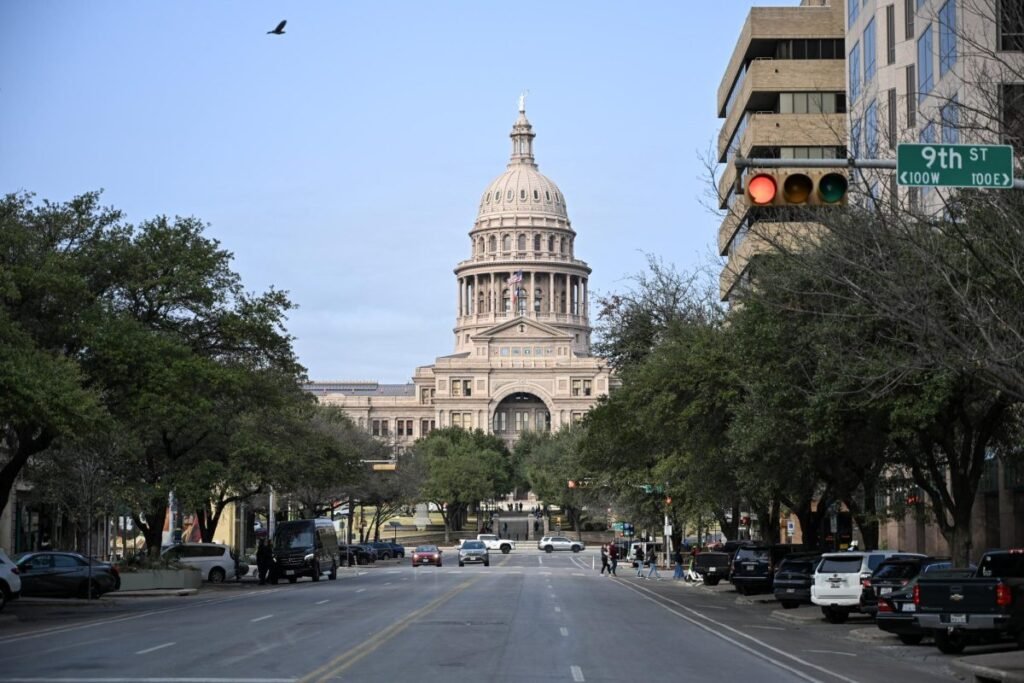
Texas has officially entered a new phase of cannabis and hemp enforcement—and for many people inside the state’s cannabis community, the change feels less like regulation and more like a return to prohibition.
Beginning July 31, 2026, Texas restored its classification of delta-8 THC as a controlled substance following a Texas Supreme Court decision that allowed the state’s earlier scheduling rule to take effect. Under current Texas Department of State Health Services guidance, only naturally occurring trace amounts of delta-8 THC are exempt from controlled-substance status.
For years, Texans were able to walk into hemp shops and purchase products containing cannabinoids such as delta-8 under an industry that developed after federal hemp legalization.
Now some of those same products can potentially be detained by regulators and referred to law enforcement.
That is a major shift—and RollersDaily strongly disagrees with the direction Texas has chosen.
What Changed in Texas?
The Texas Department of State Health Services says consumable hemp products labeled as containing delta-8 THC, or products containing more than naturally occurring trace amounts of certain tetrahydrocannabinols, may now be detained and referred to law enforcement.
Compliant hemp-derived delta-9 THC has not disappeared completely.
Texas still permits consumable hemp products containing no more than 0.3% delta-9 THC on a dry-weight basis, provided they comply with the state’s other hemp regulations.
Texas also currently requires purchasers of consumable hemp products to be at least 21 years old, with retailers required to verify age using government-issued identification.
So Texas already had tools available to regulate this industry.
Age restrictions.
Licensing.
Testing.
Labeling requirements.
Retail registration.
Enforcement against businesses that violate the rules.
That is exactly why the decision to push parts of the hemp market back into controlled-substance territory has frustrated so many people.
Texas Had an Opportunity to Regulate Instead of Prohibit
There are legitimate concerns surrounding intoxicating hemp products.
Products should be accurately labeled.
Consumers should know how much THC they are receiving.
Children should not have access to intoxicating products.
Businesses selling contaminated or intentionally mislabeled products should face consequences.
Those are reasonable regulatory goals.
But regulation and prohibition are two completely different approaches.
Texas could have continued strengthening testing standards, potency requirements, packaging rules and enforcement against irresponsible operators.
Instead, consumers are now watching products that were openly available for years become legally dangerous almost overnight.
That does not erase demand.
It changes where consumers may be willing to satisfy that demand.
And that is where prohibition can create an entirely different set of problems.
What Happens When Legal Supply Disappears but Demand Does Not?
This is one of the biggest concerns RollersDaily has with Texas’ approach.
Removing a product from licensed or registered stores does not necessarily mean consumers suddenly stop wanting it.
If demand remains while legal availability disappears, some consumers may turn toward unregulated sellers.
Those sellers do not necessarily have:
- Product testing requirements
- Age verification
- Accurate cannabinoid labels
- State inspections
- Recall procedures
- Business licenses
- Consumer accountability
That creates the exact situation regulators claim they are trying to prevent.
A regulated marketplace at least gives the state somewhere to enforce standards.
An underground marketplace does not.
Texas Businesses Built Around Rules the State Allowed
The hemp industry did not appear in Texas overnight.
Businesses opened stores.
Manufacturers developed products.
Employees were hired.
Brands spent money on packaging, distribution and marketing.
Consumers became familiar with hemp-derived THC products being sold openly across the state.
Texas itself created a licensing and registration structure around consumable hemp businesses.
The state currently lists annual fees of $10,000 per location for a consumable hemp product license and $5,000 per location for retail hemp registration.
Think about that for a second.
Businesses can spend thousands of dollars just to participate in the legal hemp system…
While also facing the possibility that major portions of the market they built around can suddenly become prohibited.
That level of uncertainty is difficult for any industry to survive.
THCA Is Also Facing Tighter Treatment
Texas regulators have also changed how THCA is considered when determining whether certain hemp products comply with legal THC limits.
DSHS reported in July 2026 that its rules include THCA when calculating total delta-9 THC, creating additional pressure on products that previously relied on the distinction between THCA and delta-9 THC before heating or combustion.
That distinction matters because many hemp flower products have historically been marketed around high THCA levels while remaining below the traditional 0.3% delta-9 THC threshold before use.
Texas’ newer approach substantially narrows that space.
Not Every Hemp Product Is Illegal
This is important.
Texas has not banned every hemp product.
CBD products and compliant hemp-derived products can still remain legal if they satisfy state requirements.
Products may contain no more than 0.3% delta-9 THC by dry weight, and retailers must comply with licensing, registration, labeling and age-verification requirements.
The problem is that the legal line has become much more complicated.
A consumer can no longer assume that something is legal simply because it looks like a hemp product or because a similar product was sold legally last year.
Traveling Into Texas Creates Another Risk
Texas’ changes also create an important issue for travelers.
Cannabis and hemp laws can change dramatically the moment someone crosses a state line.
A product legally purchased somewhere else may not necessarily be legal once someone enters Texas.
That means travelers should never assume that a legal purchase in another jurisdiction automatically remains legal during interstate travel.
This is especially important for consumers carrying products containing delta-8, THCA or other THC variants now receiving stricter treatment under Texas law.
RollersDaily’s Position
RollersDaily supports sensible cannabis regulation.
Testing makes sense.
Age restrictions make sense.
Accurate labeling makes sense.
Rules preventing contaminated or dangerously manufactured products from reaching consumers make sense.
But criminalizing consumers and dismantling legitimate businesses should not be the first answer when a functioning regulatory system can address many of the same concerns.
Texas had an opportunity to build one of the strongest regulated hemp markets in the country.
Instead, state policymakers have chosen an approach that places parts of the market back under prohibition while much of the United States continues debating how to move cannabis policy toward legalization and regulation.
We believe Texas is moving in the wrong direction.
The Bigger Cannabis Debate
This issue reaches beyond delta-8.
The real question is what cannabis policy is supposed to accomplish.
If the goal is protecting consumers, regulation provides governments with tools to test products, verify ages, inspect businesses and punish companies that break the rules.
If the goal is simply making products disappear from licensed shelves, prohibition can accomplish that.
But history has repeatedly shown that removing legal access does not automatically remove demand.
Texas now has to decide what comes next.
Will lawmakers eventually move toward a broader regulated cannabis system?
Will the hemp industry challenge these restrictions further?
Or will Texas continue tightening cannabis laws while neighboring states and much of the country move in another direction?
The cannabis community will be watching.
What Do You Think?
Should Texas regulate intoxicating hemp products with strict testing, age limits and labeling standards?
Or should products such as delta-8 remain controlled substances?
Join the conversation and follow RollersDaily for more cannabis law, policy and industry coverage.
Disclaimer
This article is provided for news, commentary and educational purposes only and does not constitute legal advice or encourage the possession, purchase, transportation or sale of cannabis or hemp products in violation of federal, state or local law.
Sources: Fort Worth Star-Telegram; Texas Department of State Health Services; Supreme Court of Texas.